


Engineering Networks and Systems
Functional engineering systems for any facility
-
>50
Units of own equipment
-
>150
Qualified employees
-
2
Production bases in Moscow and Saint Petersburg
-
200+
Civil and industrial construction projects
About the Technology
Engineering networks and systems ensure the building's operation after commissioning: power supply, water supply, sewerage, heating, ventilation, air conditioning, low‑current systems, and external utilities. Errors in these sections often lead to rework, conflicts on site, and budget overruns.
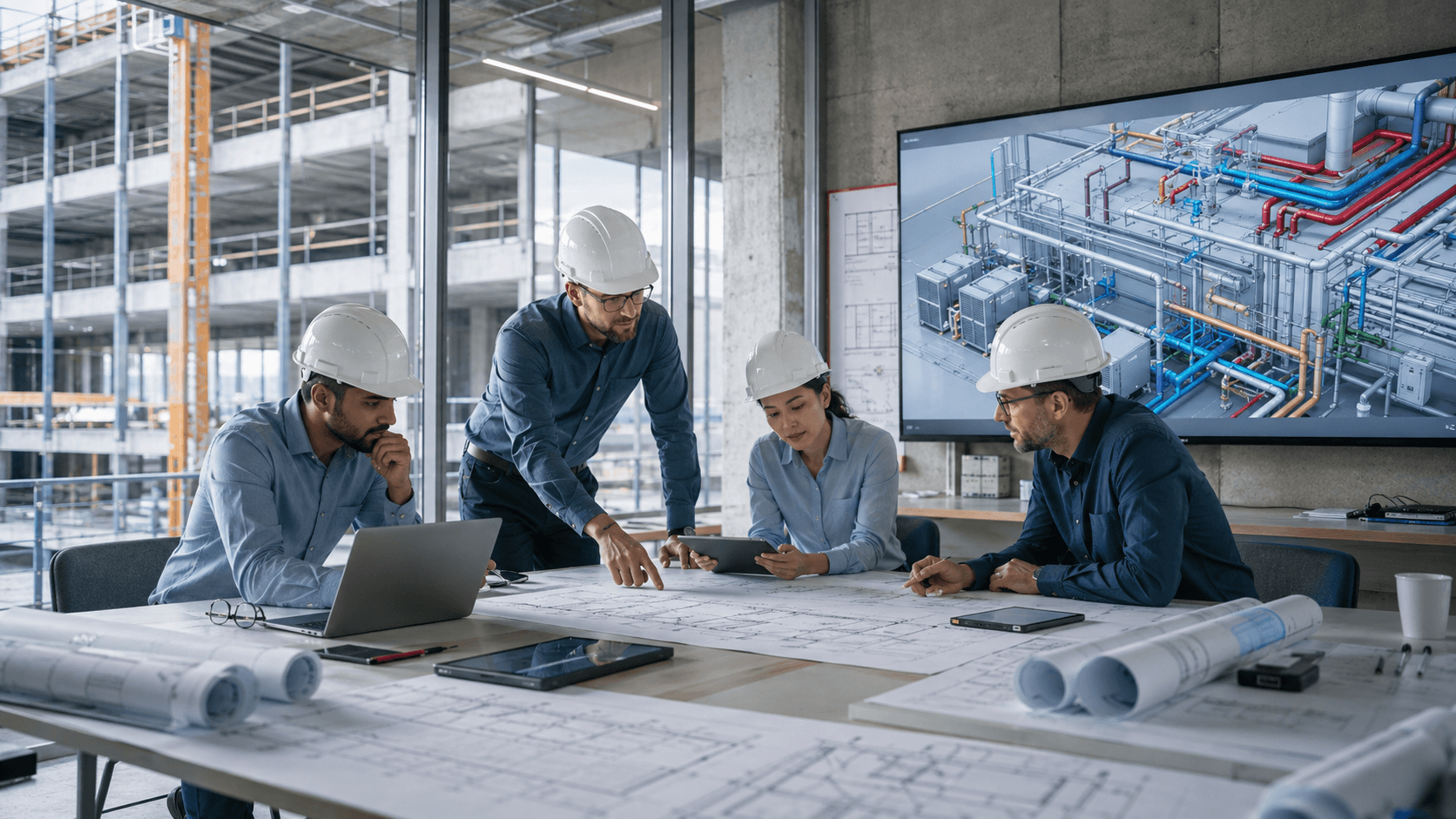
Design begins with an analysis of the facility's purpose, technical specifications, architectural solutions, and operational requirements. Engineering systems are coordinated with each other, with structural elements, rooms, process equipment, and future construction and installation works. This allows routes, capacities, connection points, and equipment service zones to be determined in advance.
- Analysis of initial data – study the technical specification, architectural solutions, technical conditions, and operational requirements of the facility.
- Determination of system composition – define the list of internal and external engineering networks required for the building's normal operation.
- Calculations and solution selection – determine loads, capacities, flow rates, equipment parameters, and main technical solutions for the systems.
- Coordination of engineering sections – check network intersections, equipment placement, passages through structures, and connection to the building's architecture.
- Preparation of project documentation – formalize materials for further design, approvals, equipment procurement, and work execution.
Advantages
-
Engineering systems are coordinated with architecture and structure
Heating, water, electricity do not conflict with load‑bearing walls and facades – everything works in a single scheme
-
Reduced risk of network intersections on the construction site
Pipes and cables do not clash in nodes, manholes do not interfere with foundations – fewer corrections on site
-
Solutions selected with operation and maintenance in mind
Networks are designed to provide convenient access for repair and replacement without damaging structures
-
A clear basis for budgeting and scheduling
Accurate composition and scope of engineering systems – in the estimate without hidden work and additions
-
Documentation suitable for further construction and installation works
Ready‑made diagrams and drawings are handed over to contractors without modifications – construction proceeds as planned
-
We will Calculate the Cost of Works
Leave your contacts, and our engineer will prepare a preliminary calculation for you
Prices
The cost of engineering network design depends on the facility's purpose, area, number of systems, routing complexity, equipment composition, and automation requirements. The price is also influenced by the availability of technical conditions, the need for external network design, the number of connection points, and the level of detail in the project documentation. To calculate, we need initial data on the facility: architectural plans, technical specifications, load information, technical conditions, operational requirements, and the list of systems to be provided. After analysis, we can determine the scope of work, timeline, and design cost.
| Gas supply | from 5,000 RUB/km |
| Electrical networks (0.4–35 kV) | from 3,000 RUB/km |
| Comprehensive project | customized |

How We Work
Simple and transparent workflow
Request
Project Analysis
Solution Selection
Work Execution
Delivery
Frequently Asked Questions
-
Can engineering system design be started without a full building project?
Yes, if basic architectural solutions, room purposes, and load understanding are already available. However, accurate coordination still requires up‑to‑date plans and initial data.
-
Which engineering systems can be included in the project?
The project may include power supply, lighting, water supply, sewerage, heating, ventilation, air conditioning, low‑current systems, automation, and external networks. The composition depends on the purpose of the facility.
-
How are intersections between networks avoided?
Engineering sections are coordinated with each other and with architecture. Routes, shafts, technical rooms, passages through structures, and equipment service zones are checked.
-
How long does engineering network design take?
The timeline depends on the area of the facility, the number of systems, the completeness of initial data, and the complexity of technical solutions. The earlier engineering sections are included in the project, the lower the risk of rework at subsequent stages.
Why Choose Us
-
Coordination of engineering sections
We check the compatibility of networks with each other, with architecture, and with structural solutions.
-
Practical approach to construction
We design so that solutions can be implemented on site without unnecessary rework.
-
Understanding of operation
We consider access to equipment, system maintenance, and future operation of the facility.
-
Work with technical conditions
We analyze restrictions on connection, loads, and existing utilities.
-
Comprehensive facility design
Engineering solutions are considered as part of the overall project, not as a separate set of diagrams.
-
We Will Calculate the Cost of Works
Leave a request and we will contact you shortly
Trusted By





Have Questions?
Contact Us
We will discuss your project, offer the best solution, and prepare a commercial proposal
-
Individual Approach
We take into account the specifics of your facility and business needs
-
Quick Response
We will respond within 15 minutes during business hours
-
Confidentiality
We guarantee the safety of your data